


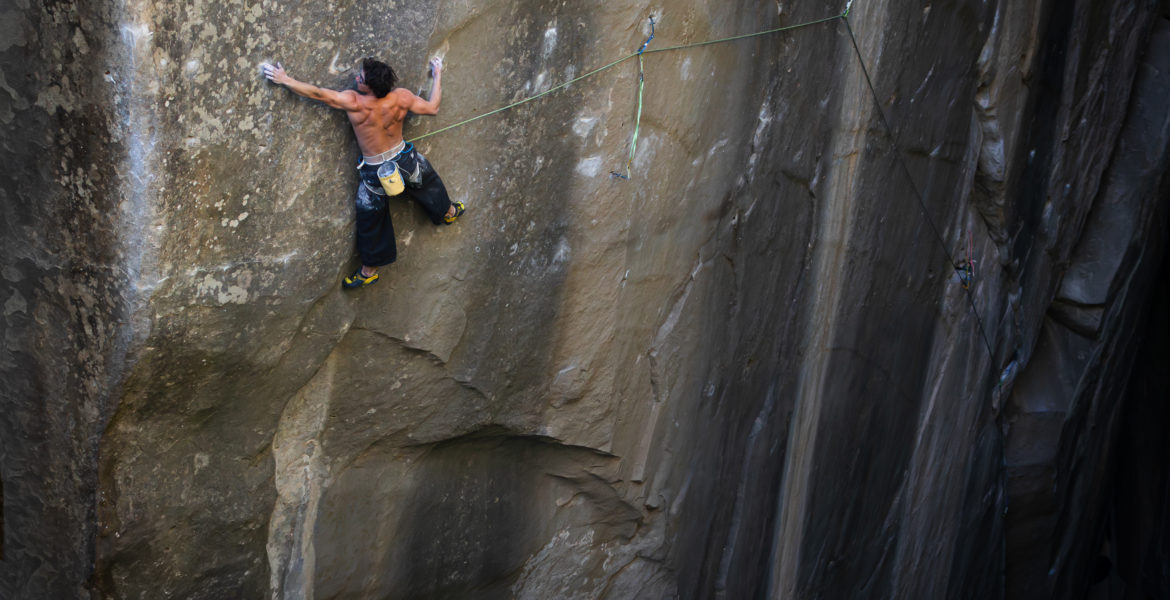
Esteban Daligault, 25 ans, incarne parfaitement la nouvelle génération française touche à tout et talentueuse : alpiniste de haut-niveau, falaisiste nonogradiste, très bon ouvreur indoor de renommée nationale, coach de compétiteurs internationaux. Il sait tout faire et avec panache ! Esteban vient d’annoncer sur les réseaux avoir réalisé en décembre la 5ème ascension de « Bon Voyage », ouvert par James Pearson à Annot, réputée être la voie trad la plus difficile du pays (9a). Un nouveau coup d’éclat dans une relative nouvelle discipline pour lui, le trad extrême. Il a accepté de répondre à nos questions !
– Présente-toi, tu es un véritable touche à tout, alpiniste, falaisiste, ouvreur… Comment fais-tu pour passer d’une activité à une autre avec autant de talent ?
Esteban, 25 ans, originaire de Sallanches (Haute-Savoie), j’habite à Grenoble, entraineur au pôle France de Voiron. Je suis touche à tout depuis tout petit, avec un papa guide. J’ai commencé à faire pas mal de montagne, et de la falaise. Je faisais aussi du skate, du vélo, j’ai fait beaucoup d’ouverture. Cela me permet d’avoir un bagage un peu complet, j’adore tout faire et j’en ai besoin, donc je pense que c’est un peu grâce à cela que j’arrive à switcher. Pour moi, c’est davantage compliqué en organisation qu’en termes de compétences physiques. Je me nourris pas mal de toutes ces activités, et aussi de mon métier : ce côté recherche de performance, optimisation que je travaille quotidiennement, que je peux appliquer ensuite dans mes pratiques perso.
– Le trad extrême, c’est nouveau pour toi ou tu avais déjà vécu quelques expériences ? Qu’est-ce qui t’a motivé à essayer « Bon Voyage » ?
Le trad c’est pas vraiment nouveau, car vu que je fais de l’alpinisme, j’ai toujours grimpé sur des coinceurs. J’en ai fait quand j’étais au RAP (Roc Aventure Programme), et j’ai commencé à essayer des voies un peu plus dures en 8ème degré depuis un ou deux ans, et là je me suis dit pourquoi pas essayer « Le Voyage » et « Bon Voyage » ensuite, dans la logique. Mais c’est vrai que c’est la première voie dure que je fais, et c’était intéressant de se rendre compte de toute la logistique que cela demande, de retirer les friends à chaque essai, surtout que c’est en traversée donc assez compliqué.
– Pourquoi est-ce atypique et esthétique comme tu le décris dans ton post ?
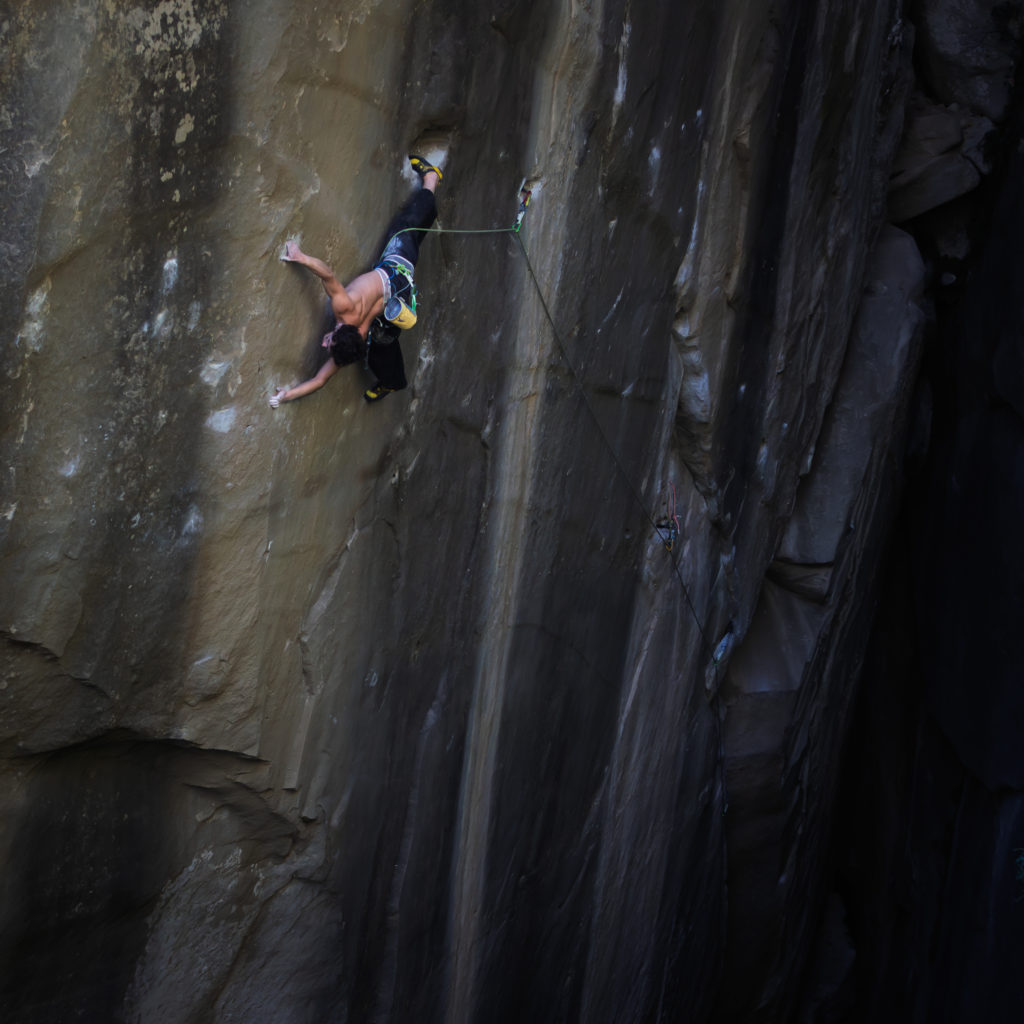
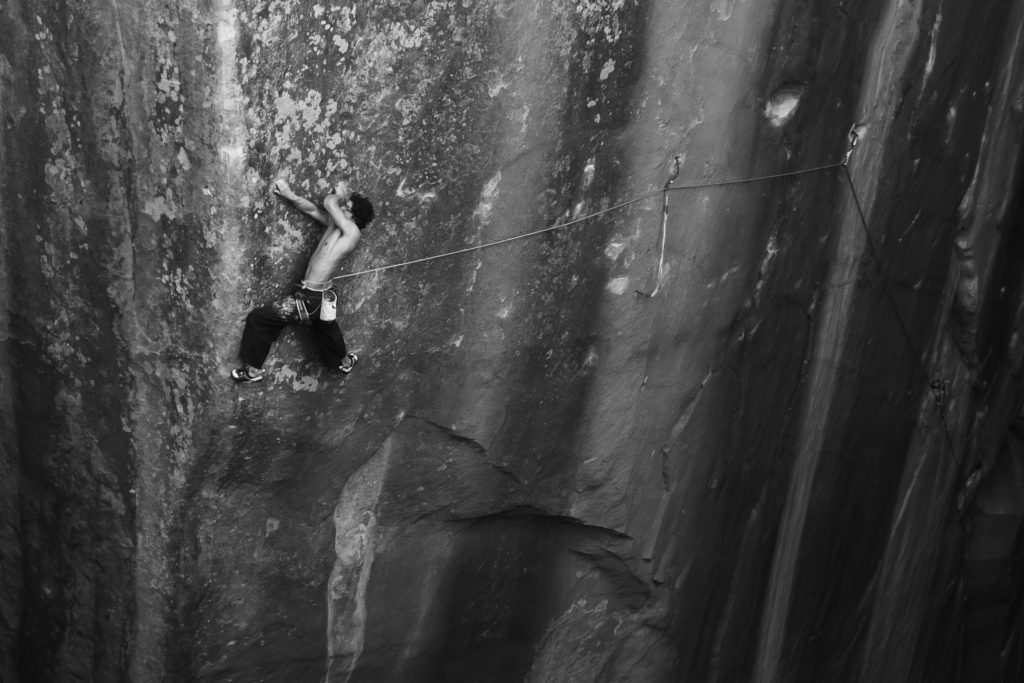
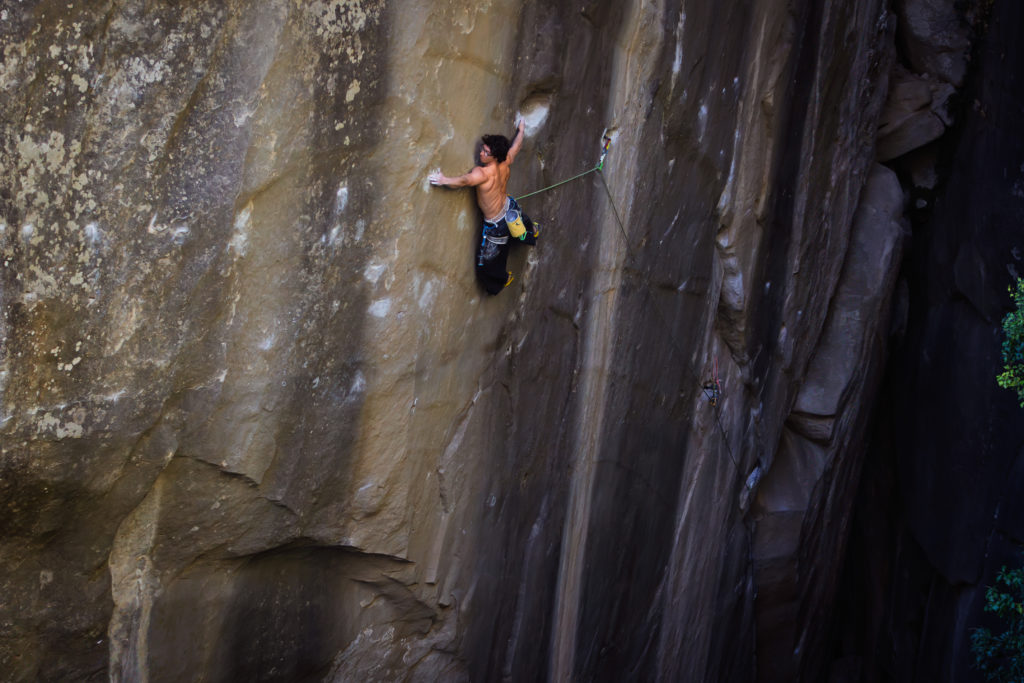
Cette voie est atypique car c’est sur friends, mais ce n’est pas vraiment une fissure, ce sont des trous, et c’est un peu plus rare, de la petite expérience que j’ai de grimpeur chamoniard. C’est aussi en traversée, il y a cette proue à la fin avec la guillotine en dessous, c’est vraiment complet comme voie et en style, sur bidoigts et monodoigts, je ne suis pas fort là-dedans, et c’était assez classe de pouvoir avoir juste de quoi passer et se protéger dans ce mur tout lisse. Si tu enlèves une prise, cela ne passe plus ou alors ça devient vraiment extrême. C’est pile parfait pour que cela marche bien ! En plus dans la chambre du roi à Annot, c’est trop classe !
– Quelle a été pour toi la difficulté principale de la voie ?
Je dirais trouver les méthodes. Il y avait des vidéos mais j’ai essayé les méthodes d’Adam dans les deux premiers moves durs et j’étais trop petit, je n’y arrivais pas du tout. Une fois que j’ai trouvé l’autre méthode, en inversant les mains, comme James ou Jacopo faisaient, ça a débloqué les choses, car j’étais assez bien dans la suite, et du coup j’ai commencé à pouvoir mettre des essais. J’ai pas mal travaillé la voie à la corde, j’ai pas mis tant d’essais du bas, un truc comme 5, et je suis tombé assez vite en haut.
– Comment s’est passé le travail de la voie, des premiers essais au run gagnant ?
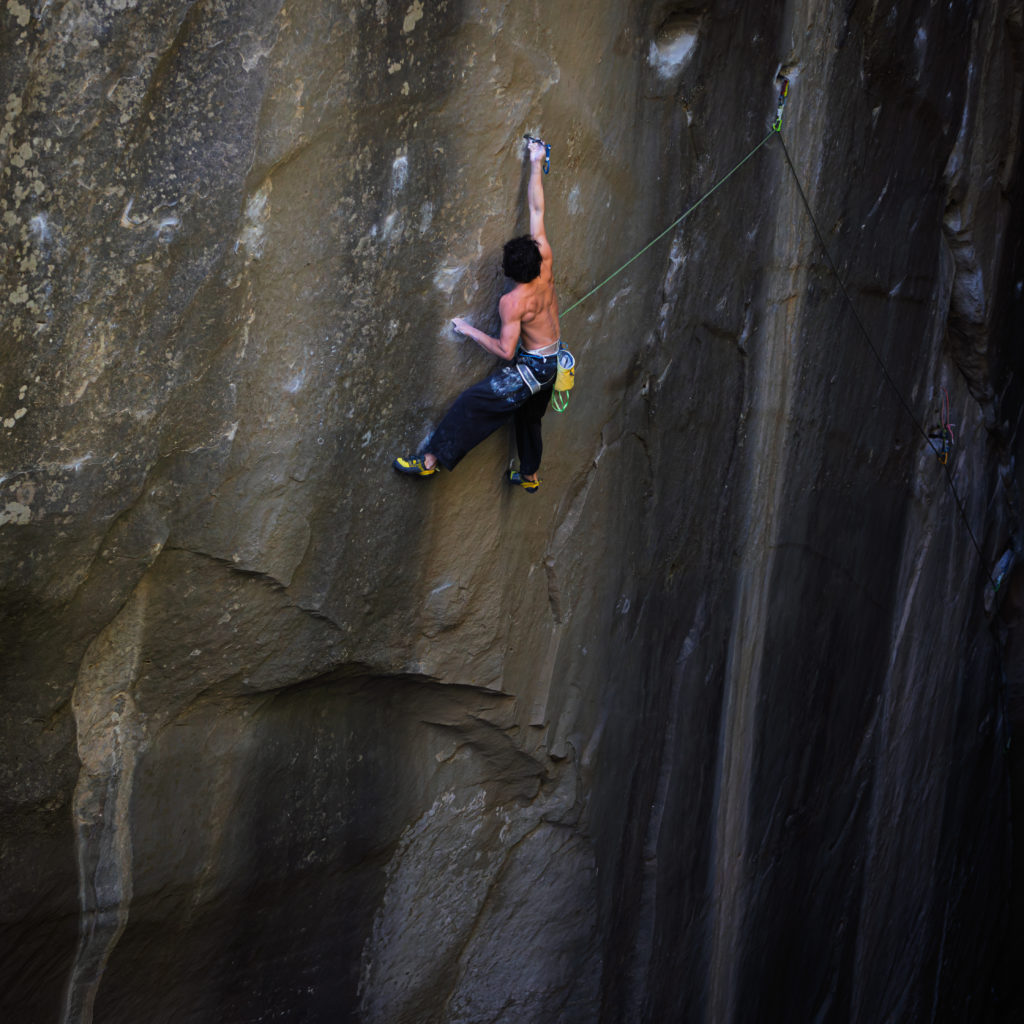
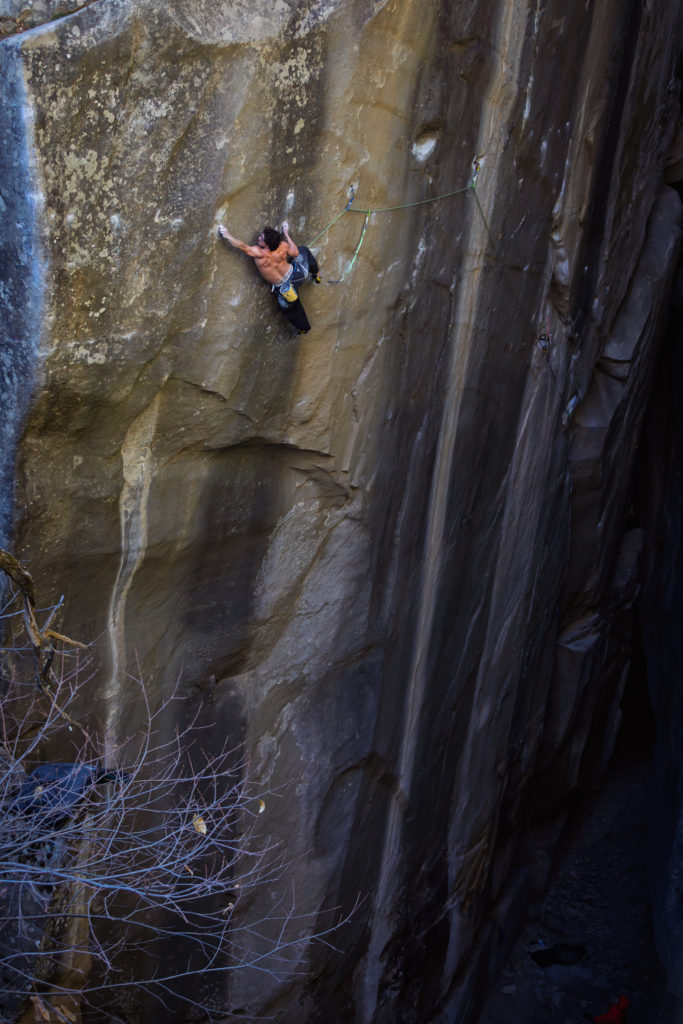
Pas mal de travail à la corde. J’ai aussi essayé en moulinette, car vu que c’est en traversée, c’est un peu compliqué sur une stat’, j’avais un peu du mal. J’ai dû mettre 2 séances au printemps dernier, et là 5 ou 6, en travaillant pas mal à la corde. Dans les essais, quand j’ai passé les deux premiers mouvements de la section dure, j’ai dû tomber 3 fois juste après, puis une fois la main sur l’arête, et j’ai fait le lendemain, bizarrement avec des conditions horribles.
– Tu sembles l’avoir fait vite, cela te donne envie d’essayer d’autres lignes extrêmes en trad comme « Tribe » par exemple ? Quoi de prévu pour 2026 ?
Oui j’ai bien envie de continuer, j’ai bien envie d’aller essayer « Tribe », ça a l’air trop classe et sur du caillou qui me donne bien envie. Ca m’a ouvert les yeux sur cette pratique et j’aimerais aller essayer d’autres voies. Ensuite, j’aimerais bien en trouver une aussi, je trouve ça assez cool ce que James a déniché ici, avec tout le processus qui va derrière. Pour 2026, j’ai pas mal de projets en alpi pour finir l’hiver, et après j’aimerais bien essayer des voies sportives un peu plus dures. J’ai réalisé quelques 9a et j’aimerais consacrer un peu de temps à essayer plus dur. Et j’ai aussi quelques projets de grande-voies un peu dures à libérer et répéter !
Photos issues du run d’enchainement (!) : Henning Wang
Esteban Daligault, 25, perfectly embodies the new generation of talented French climbers who excel in multiple disciplines: he is a high-level mountaineer, a 9th grade rock climber, a nationally renowned indoor route setter, and a coach of international competitors. He does everything with panache! Esteban recently announced on social media that in December he completed the fifth ascent of “Bon Voyage,” opened by James Pearson in Annot, reputed to be the most difficult trad route in the country (9a). This is yet another impressive feat in what is a relatively new discipline for him, extreme trad climbing. He agreed to answer our questions!
– Introduce yourself. You’re a real all-rounder: mountaineer, rock climber, route setter. How do you manage to switch from one activity to another with such skill?
Esteban, 25, originally from Sallanches (Haute-Savoie), I live in Grenoble and am a coach at the France training center in Voiron. I’ve been a jack-of-all-trades since I was a kid, with a dad who was a guide. I started by doing a lot of mountain and rock climbing. I also skateboarded, cycled, and did a lot of routesetting. This has given me a fairly comprehensive skill set. I love doing everything and I need to, so I think that’s partly why I’m able to switch so easily. For me, it’s more complicated in terms of organization than physical skills. I draw a lot of inspiration from all these activities, and also from my job: the pursuit of performance and optimization that I work on every day, which I can then apply to my personal activities.
– Is extreme trad climbing new to you, or have you had some experience with it before? What motivated you to try “Bon Voyage”?
Trad climbing isn’t really new to me, because as a mountaineer, I’ve always climbed using trad gear. I did it when I was in the RAP (Rock Adventure Program), and I started trying slightly harder routes in the 8th grade a year or two ago, so I thought, why not try “Le Voyage”, and then “Bon Voyage” as a logical next step. But it’s true that this is the first difficult route I’ve done, and it was interesting to realise all the logistics involved, removing friends after each attempt, especially since it’s a traverse, which is quite complicated.
– Why is it atypical and aesthetic, as you describe in your post?
This route is atypical because it’s on friends, but it’s not really a crack, it’s holes, and that’s a bit rarer, from my limited experience as a climber in Chamonix anyway. It’s also a traverse, there’s this prow at the end with the guillotine below, it’s a really complete route in terms of style, with two-finger and one-finger pockets, which I’m not very good at, and it was pretty cool to have just enough to get through and protect yourself on this smooth wall. If you remove one hold, you can’t get through or it becomes really extreme. It’s just perfect for it to work well! Plus, in the king’s chamber sector in Annot, it’s so cool!
– What was the main difficulty of the route for you?
I would say finding the beta. There were videos, but I tried Adam’s methods on the first two difficult moves of the crux and I was too small, I couldn’t do it at all. Once I found the other beta, reversing my hands like James or Jacopo did, that unlocked things, because I was pretty good at the rest of the crux, and so I started to be able to make attempts from the ground. I worked the route quite a bit on the rope, I didn’t make that many attempts from the ground, something like five, and I fell pretty quickly at the top.
– How did the work on the route go, from the first attempts to the send?
Quite a lot of work on the rope. I also tried on a top-rope, because since it’s a traverse, it’s a bit complicated on a static rope, I was having a bit of trouble. I had two sessions on it last spring, and this time I had to do five or six, working quite a bit on the rope. In the attempts, when I got through the first two moves of the hard section, I fell three times right after that, then once with my hand on the arete, and I sent it the next day, strangely with horrible conditions.
– You seem to have done it quickly. Does that make you want to try other extreme trad routes, such as “Tribe,” for example? What are your plans for 2026?
Yes I definitely want to continue. I really want to try “Tribe.” It looks so cool, and the rock appeals to me. It opened my eyes to this practice and I’d like to try other routes. Then I’d also like to find one myself. I think what James has found here is pretty cool, with the whole process behind it. For 2026, I have quite a few alpine projects to finish off the winter, and after that I’d like to try some slightly harder sport routes. I’ve done a few 9as and I’d like to spend some time trying harder lines. And I also have a few tough multi-pitch projects to free or repeat!
All pics have been taken during the send go by Henning Wang
Philippe
Pas la plus dure du monde? 😉