


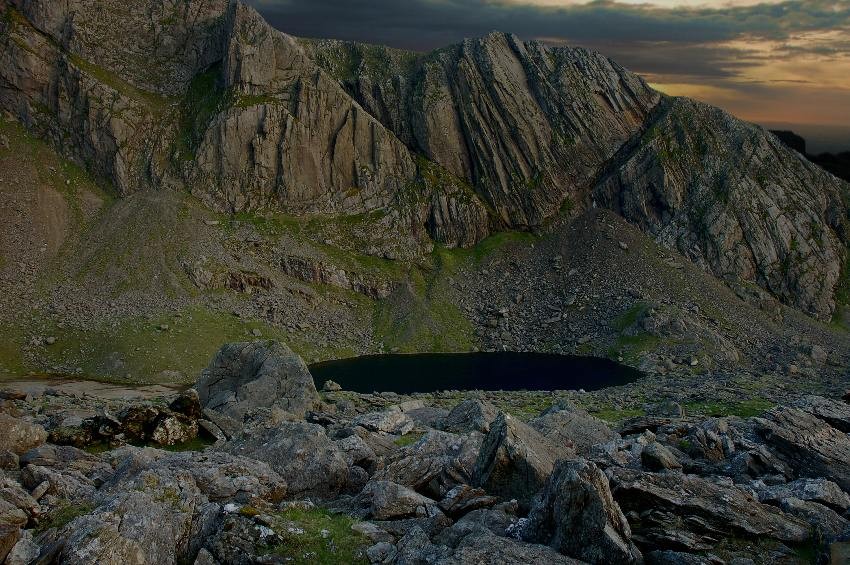
La France n’a pas d’équivalent d' »Indian Face »: une voie embuée d’un statut proprement légendaire du fait de son histoire, laquelle est étroitement liée au risque mortel que prennent ses prétendants (ô combien peu nombreux). Il y a 40 ans, au nord du Pays de Galles, Johnny Dawes réussissait la première ascension de cette ligne de trad d’une difficulté inouïe sur rhyolite, mais surtout, donc, extrêmement dangereuse : « Indian Face », E9 6c située à Clogwyn Du’r Arddu, Snowdon, pour le premier E9 britannique. Depuis, seulement 8 répétitions, toutes par des hommes. Nick Dickson, l’un d’eux, en a dit que pour la tenter il ne faut pas « être prêt à mourir, mais être prêt à courir le risque de mourir ». La voie est une longue dalle de 45 mètres, caractérisée dans la seconde moitié en particulier par des prises de pied et de main mauvaises et précaires, le tout sans protection depuis un moment. John Redhead avait quelques années plus tôt essayé de s’attaquer à un ligne adjacente sur le Master’s wall, et l’avait payé d’une chute de 30 mètres.
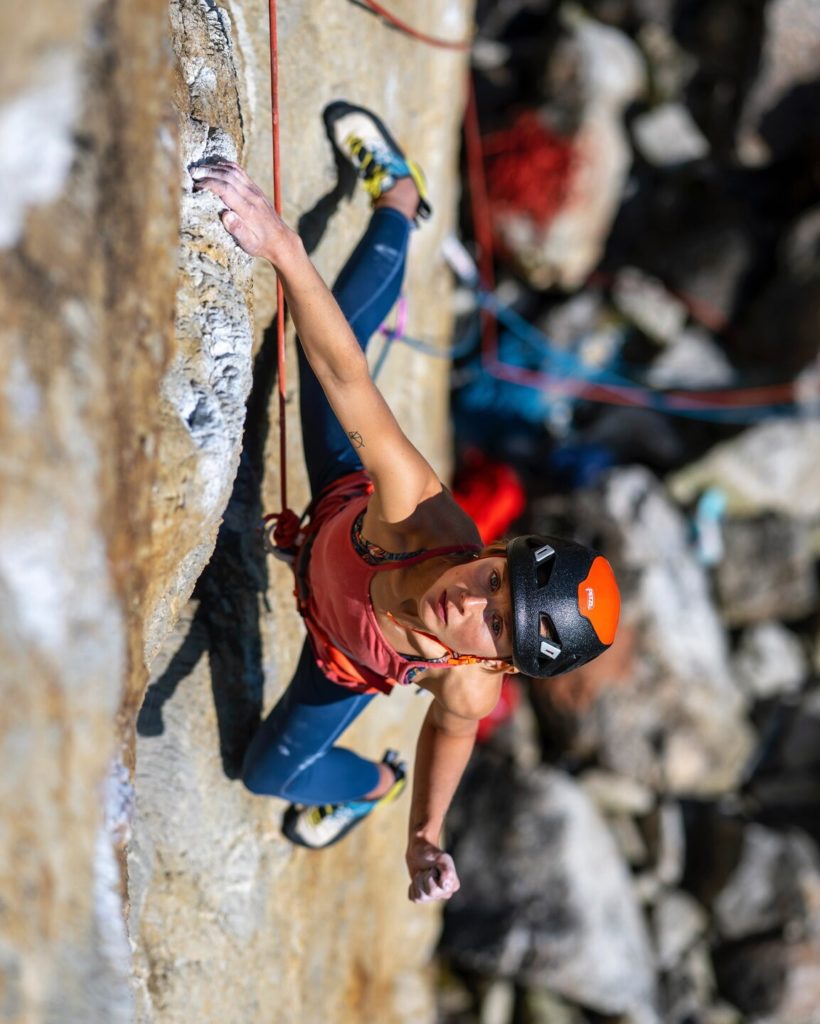
Rachel Pearce, bien qu’inconnue en France, ne sort pas de la pampa; il y a deux ans elle enchainait un autre E9 6c, « Olwen ».
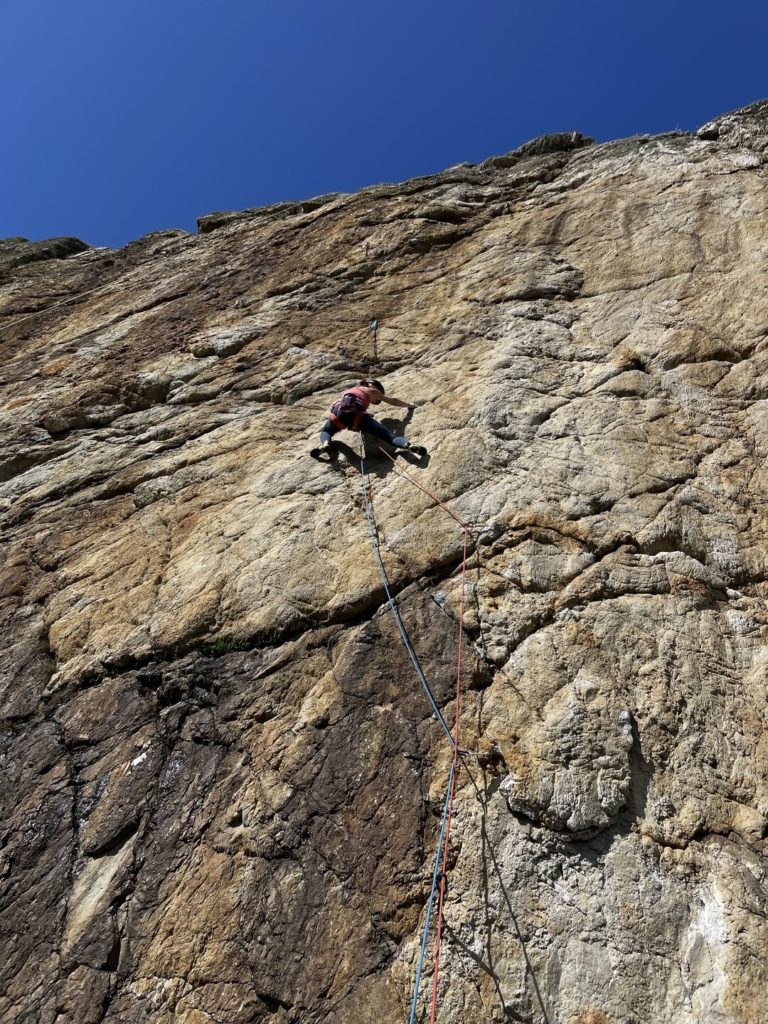
Ceci étant, du fait de son aura et du risque objectif plus qu’avéré d' »Indian Face », le défi mental a rendu cette dernière réussite plus marquante. Comme Rachel le dit dans son annonce :
« C’est sans doute la voie la plus emblématique du Pays de Galles à mes yeux, et je pense que si j’avais dû choisir une voie à enchainer, ça aurait été celle-là. Un rêve devenu réalité. Je n’avais encore jamais versé de larmes de joie en attrapant les prises à la fin d’un crux. Je pensais que j’allais crier de joie, mais à la place, j’ai versé quelques larmes et j’ai affiché le plus grand sourire de ma vie en regardant George en contrebas. Je n’avais jamais senti mon cœur battre aussi fort que sur cette vire. »
Quelques jours seulement après la coche d’un 9b+ en 6 petites séances par Laura Rogora, une autre femme rétrécit l’écart avec les hommes au niveau non pas de la difficulté pure cette fois-ci, mais de l’engagement le plus radical.
Photos de Jethro Kiernan et Rachel Pearce
France has no equivalent to ‘Indian Face’: a route steeped in a truly legendary status due to its history, which is closely linked to the life-threatening risks taken by its (all too few) candidates. Forty years ago, in North Wales, Johnny Dawes made the first ascent of this trad route of unprecedented difficulty on rhyolite, but above all extremely dangerous: “Indian Face”, E9 6c, located at Clogwyn Du’r Arddu, Snowdon – the first British E9. Since then, there have been only eight repeat ascents, all by men. Nick Dickson, one of them, said that to attempt it, you must not “be prepared to die, but be prepared to take the risk of dying”. The route is a long, 45-metre slab, characterised – particularly in the second half – by poor and precarious foot and hand holds, all of which have been unprotected for some time. A few years earlier, John Redhead had attempted to tackle an adjacent line on the Master’s Wall, and paid the price with a 30-metre fall.
Rachel Pearce, although unknown in France, is by no means a nobody; two years ago she climbed another E9 6c, “Olwen”. That said, given its legendary status and the very real, well-documented risk posed by “Indian Face”, the mental challenge made this latest achievement all the more memorable. As Rachel says in her announcement:
‘Probably the most iconic route in Wales for me, and I think if I were to have ever picked something to head point, this would be the one. Dream come true. Never had tears of happiness grabbing jugs before at the end of the crux. I thought I’d shout with joy, but instead I shed some tears and had the biggest smile ever looking down at George. Never had my heart beating out of my chest as much as I could feel it on the foot ledge.‘
Just a few days after Laura Rogora ticked a 9b+ in just six short sessions, another woman has narrowed the gap with men – not in terms of sheer difficulty this time, but in terms of the most radical mental and existential commitment.
Photographs by Jethro Kiernan and Rachel Pearce